
The Six Layers of AI Governance
AI governance is the structured approach to ensuring that artificial intelligence systems are designed, implemented, and maintained responsibly, ethically, and effectively. As organizations increasingly rely on AI, strong governance frameworks are critical to mitigate risks and build trust. Here’s an overview of the six key layers of AI governance:
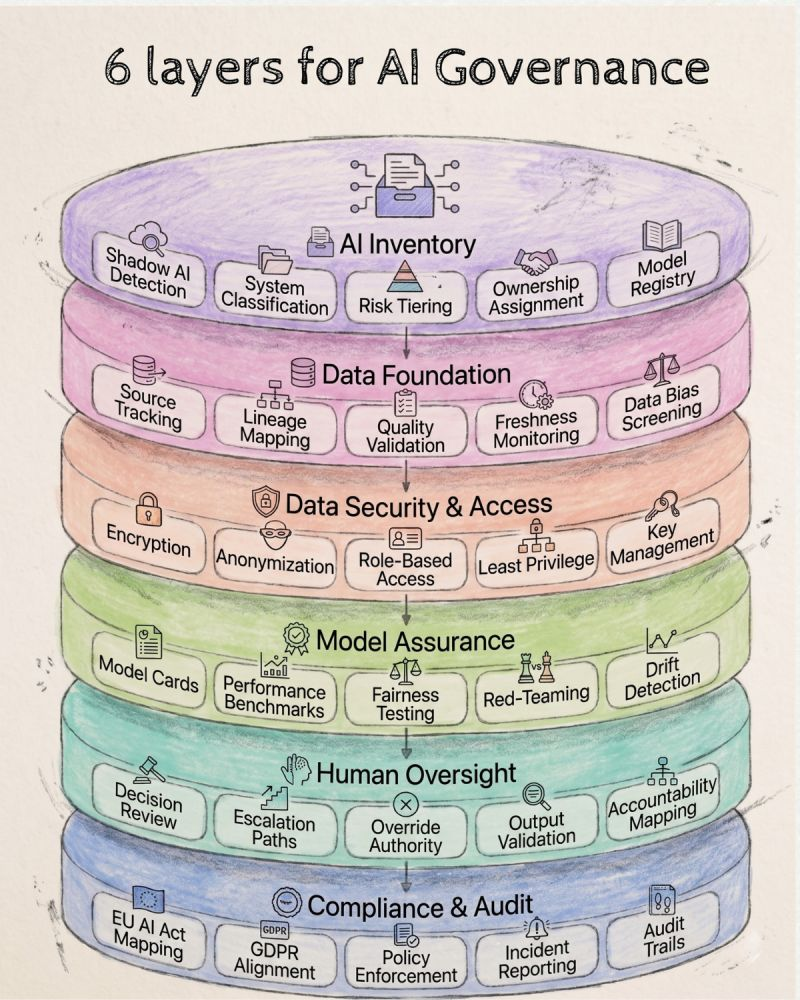
1. AI Inventory
AI inventory refers to the comprehensive documentation of all AI systems and components within an organization. Keeping an up-to-date AI inventory provides visibility, enabling organizations to track all deployed models, associated use cases, and their status.
2. Data Foundation
A strong data foundation ensures that AI models are built on high-quality, relevant, and unbiased data. This layer includes data collection, labeling, quality management, and secure storage.
3. Model Assurance
Model assurance involves verifying and validating the AI models to ensure they are accurate, reliable, and robust. This includes monitoring model performance, testing for edge cases, and tracking model drift.
Key GoalsBest PracticesMaintain accuracyContinuous evaluation and retrainingTest robustnessSimulations, adversarial testingTrack model driftAutomated monitoring and alerts
4. Human Oversight
Despite advances in AI, human involvement remains essential. Human oversight enables appropriate intervention in critical decisions and ensures accountability for AI-driven outcomes.
5. Compliance & Audit
This layer ensures that AI systems adhere to ethical standards, regulatory requirements, and internal policies. Regular audits and documentation provide traceability and support external or internal investigations.
